Update on the Situation in Turkey
N°276, November 20, 2003
 
 
• JALAL  TALABANI  VISITS  ANKARA. This months President of the Iraqi Government Council, Jalal Talabani, Arrived in Ankara on 19 November, accompanied by a 45-member delegation including a dozen members of the Government council and six Ministers, including the Foreign Minister Hoshyar Zebari. He was greeted at Ankara’s Esenboga airport by as a Head of State by the Foreign Ministry’s co-ordinator for Iraqi Affairs, Osman Koruturk and the Turkish ambassador to Baghdad, Osman Paksut. Former Party for Democracy (DEP) Members of Parliament, Sirri Sakik and Ahmet Turk, as well as former Mayor of Urfa, Feridun Yazar, and leaders of pro-Kurdish parties were also at the airport to welcome him.

Jalal Talabani then met with the Turkish Prime Minister, Recep Tayyip Erdogan, for a one and a quarter hour long discussion on the questions of security, of the PKK camps in Iraq and on the nature of the future Iraqi state and the Iraqi public contracts that the Turks want to enjoy in the context of the reconstruction. “Over 150 parties have been created in Iraq and we will not allow any of them to behave like enemies of Turkey …  It is up to the Americans to answer to the question of the PKK camps in Iraq and the Maxmur refugee camp … We do not have any power over these questions. The Americans want to make them lay down their arms, but at the end of 2004 there will be elections in Iraq and the American troops will be completely withdrawn in 2005.  If they do not settle this problem by then, we will do so after the elections and the PKK question will be settled” declared Jalal Talabani. He also stressed the fact that the Iraqi Kurds were part of the central government at the moment and declared himself in favour of a federal Iraqi State, which would be confirmed by the Iraqi Constitution to be adopted in 2005.

Furthermore, Jalal Talabani also accepted the principle of a second crossing post on their border with Turkey, declaring, “We had been against this before since it amounted to stifling the Kurds”.

Jalal Talabani also met with Deniz Baykal, leader of the principal opposition party in the Turkish Parliament, the People’s Republican Party (CHP — kemalist).

The Turkish press extensively commented on Jalal Talabani’s visit. “Talabani’s like an Iraqi Prime Minister” headlined the Turkish daily Milliyet on 20 November and Hurriyet, while stressing R.T. Erdogan’s insistence on the PKK pointed out, with their photos as proof, that the former DEP Members of Parliament were present to greet J. Talabani.

•  KURDISH FORMER MPs  CALL ON EU FOR PEACEFUL SOLUTION TO THE KURDISH QUESTION. On 20 November, Leyla Zana, Hatip Dicle, Orhan Dogan, Selim Sadak, the Former DEP Members of Parliament made public a press communiqué sent to a number of International leaders such as Silvio Berlusconi, the present President of the European Union, Pat Cox, President of the European Parliament, Romano Prodi, President of the European Commission, the Commissioner for the enlargement of the E.U. Gunther Verheugen, the High E.U. representative for PESC, Javier Solana and a number of other international organisations to take stock of the situation regarding national and regional political developments and to call for a political solution to the Kurdish question. Here are extensive extracts from this communiqué:

“It is now about ten years that we have been imprisoned. And the world, like Turkey, is no longer the same as when we left it. Along side developments that arouse hope there are other developments that we mistrust. No doubt we are unable to influence world and national orientations and developments.

However, we cannot, in all conscience, resign ourselves to remaining simple spectators. It is for this reason, and because of the responsibilities that history has imposed on us, that we think that it is our duty to let our opinions be known about developments in our country.

The winds of change are shaking the whole world, and this period, in which the world in general and the Middle East in particular are being redrawn, is naturally influencing Turkey profoundly (…)

Turkey finds itself confronted with its own transformation, but the task of guiding these changes in the Middle East falls on it as well. The fact remains that, to accomplish this historic mission of instigator and to set up, in the Islamic world, a modern, democratic and secular State, Turkey must settle its own internal problems (…)

It is for these reasons, and because of the geographical area in which we live, that we have, for many years, been waging a struggle for democracy and peace, and in this critical process in which the democratic solution of the Kurdish question finds itself the vital priority for our country, that we call for just more receptivity.

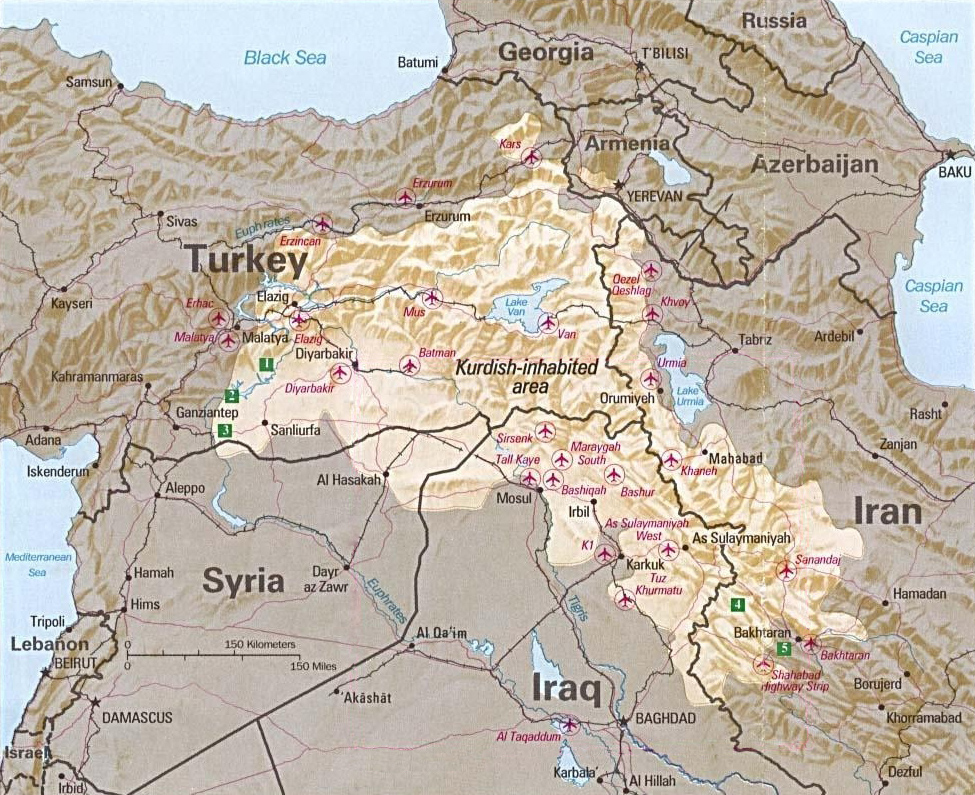
To tell the truth, the Kurdish question is a simple one for us. The origins of its complexity have many reasons, but the first of them is the fact that the Kurds principally live, in considerable numbers, in Turkey, in Iraq, in Iran and in Syria (…). These States, which do not all have the same attitude on all matters, nevertheless use the same model, in their deadlocks as in their successes.
The second reason is due to the geography of Kurdistan as a whole, and thus of the riches of its soil and subsoil, to its strategic situation as its geographic particularity that make favour external interventions and to the fact that it is the centre of interests that attract external dynamic forces. In other terms, the solution cannot only come from internal dynamics. A peaceful solution to the question, is accessible because the Kurds, at no time ion their history, have deliberately chosen violence. The obstacles to democratic paths, the impossibility of expression in the judicial and legal areas, the prohibitive, oppressive, negationist and destructive attitude of States that forbid them fundamental rights and freedoms as a whole have had the consequence that on the basis of a legitimate self-defence violence may have been chosen in the absence of any other recourse.

The third reason is that the Kurds have never fought the peoples with whom they cohabited in all fraternity, and have not fuelled intercommunal conflicts that generate bitterness, hatred and indignation. These points favour the search for a peaceful solution to the question (…)

In these critical circumstances, our greatest expectation from the organisations of the international community is to see them support and strengthen the dynamic in favour of peace and evolution in Turkey (…)”
The next hearing of the new trial of Leyla Zana and her fellow ex-M.P.s is scheduled for Friday 21 November, before the Ankara State Security Court.

• EU’S 2003 REPORT ON TURKEY’S  PROGRESS: CYPRUS OBSTACLE, INEFFECTIVE REFORMS . In a “strategic document” devoted to three countries applying for membership of the European Union, the European Commission points out that, though Turkey has adopted important reforms recently, there remains, however, “much to do in a number of areas”.
“The absence of any settlement (Cyprus) could become a serious obstacle to Turkey’s aspirations” to joining the Union id the deadlock has persisted at the time when the ten countries join the Union. On 1 May 2004, warned the “strategic document” devoted to three countries applying for membership. The document particularly cites “the strengthening of the independence of the legal system and the improvement of its operation” as well as respect for fundamental freedoms (freedom of association, expression and religion). But the Commission also demands “that relations between civilian and military authorities be aligned on European practices”.

“Turkey should pay attention to the setting up of complete and effective reforms guaranteeing the observance of Human Rights and fundamental freedoms for its citizens, in accordance with European standards” the Commission continues. “It will take time for the spirit of reform to be fully reflected in the attitudes of the executive and judicial bodies, at all levels and throughout the country, thus proving that they have been effectively put to work” according to this “strategic document”.

The European Commission will, at the end of 2004, question the member countries of the European Union on whether or not to open negotiations with Turkey for its membership.

The European Commission’s report on Turkey is “objective” affirmed the Turkish Foreign Minister Abdullah Gul on the day it appeared while at the same time rejecting any connection between his country’s application for membership of the European Union and any settlement in Cyprus. “We are conscious of the fact that certain problems remain and of the delay in the application of the reforms” the Minister admitted while, nevertheless, stressing that these problems would be settled “in the next few months”.  Mr. Gul indicated that the Cyprus question was not one of the Copenhagen criteria on democracy and human rights that a candidate country was obliged to respect tom begin to open negotiations for membership of the Union. “We will deploy great efforts to find a solution to Cyprus between now and 2004” he insisted. If Ankara refuses to link membership of the E.U. with the Cyprus case, Turkish Foreign Minister Abdullah Gul himself recognised that “solving this problem could, indeed, create a positive atmosphere”.

The European executive will publish a report on the Turkish situation and “will formulate a recommendation between now and the end of October 2004, defining how far Turkey meets the political aspects of the Copenhagen criteria so as to allow the European Council to take a decision in December 2004 regarding the possibility of opening negotiations with Turkey on its membership.

Furthermore, the Peoples Democratic Party (DEHAP — pro-Kurdish) in a communiqué published on 7 November, stated that “the Cyprus question is stressed in the Commission’s report, but the most important questions that could hinder the process of Turkey’s integration into the E.U. are the Kurdish question and that of democratisation”.

• TURKEY WILL NOT DEPLOY TROOPS  IN IRAQ.  The Turkish government has finally abandoned its plan to deploy troops in Iraq to back up the coalition forces after being confronted with the lively opposition of the Iraqis and the hesitations of the Americans. The spokesman of the Foreign Ministry, Husseyin Dirioz declared, on 7 November that the Turkish government had decided not to make use of the authorisation, voted by the Turkish Parliament on 7 October, to send troops to the neighbouring country. According to Mr. Dirioz, the American minister for foreign affairs, Secretary of State Colin Powell, had called his Turkish opposite number, Mr. Gul the day before to discuss Iraq. “Mr. Powell thanked the Turkish government and people form their solidarity and friendship, which were appreciated by the American people and its government” he explained. Already, on 4 November, the Turkish Ambassador to the United States, Osman Faruk Logolu had declared that turkey would not sent troops into Iraq unless a significant change took place. “We will not insist on going into Iraq unless a clear initiative were to come from the Iraqi people” declared the Turkish Ambassador. But, when questioned by members of Parliament in a debate on the budget on 4 November, the Turkish Minister of Defence, Vecdi Gonul, declared that Turkey reserved the right to send reinforcements to its troops already deployed in Iraqi Kurdistan to fight the Kurdish fighters from Turkey.

• TEACHING OF KURDISH LANGUAGE NOT AUTHORISED,  DESPITE REFORMS. Over 200 Kurds have enrolled for Kurdish language lessons at a Language Teaching Centre, the first of its kind, but the government has still not given the green light for the opening of the school, declared Aydin Unesi, the founder of the centre on 6 November. Mr. Unesi, who himself is from Batman, is one of a number of businessmen who, for several months have been grappling with a tentacular bureaucracy for authorisation to run Kurdish language classes. The measure forms part of the group of reforms undertaken by the Turkish government with the aim of conforming to the spirit of the European Unions requirements for membership. “Up to now, we have shown patience, but from now on we will consider that there is deliberate ill will behind every obstacle” declared Mr. Unesi, who has been waiting for authorisation to open his centre since last April.

Last month building inspectors refused him permission on the grounds that the doors were five centimetres (2 inches) narrower than the standards allowed. Mr. Unesi has changed the doors but, while he was waiting for Ankara’s agreement he was given to understand that there were several other forms to fill in and present. Meanwhile the owner of the centre has started taking enrolments. “There are people of all ages and social conditions amongst our candidates — there are even Turks who want to learn Kurdish” he stressed.

Kurdish language broadcasting is facing similar difficulties. They still have not begun, although theoretically they have been legalised for several months.

Elsewhere, some Kurdish intellectuals were able, on 4 October, to organise a conference in their own language in Diyarbekir for the first time in decades. “We would not have even dreamed of organising such a thing in Diyarbekir ten years ago” declared the Kurdish Mayor of Diyarbekir, Feridun Celik, at the opening of the conference. Indeed, his speech was made in Kurdish, and in front of the Press. Kurdish intellectuals from Turkey, Iran, Iraq, Syria and European countries took part in this conference, held in the context of a five-day literary festival organised by the Town Council.

• CLASHES  BETWEEN PKK AND ARMY, MORE CHILDREN KILLED BY MINES.  Four children, three girls and a boy, ages between 7 and 10 years, were killed on 2 November and 7 others injured by the explosion of an undefined device that they had handled in the little village of Uludere, in Sirnak province. The device had been hidden near a primary school. Sirnak and the surrounding areas had been the scene of intense fighting between the PKK fighters and the Turkish Army between 1984 and 1999.  Furthermore, on 5 November four PKK fighters were killed in the course of clashes with the Turkish Army at Almus (Central Turkey) and in Bingol.

• UNHCR  CONCERNED OVER AUSTRALIA'S EXPULSION OF KURD ASYLUM SEEKERS  FROM TURKEY. On 6 November, the United Nations High Commission For Refugees (HCR) expressed its concern over the fate of 14 Turkish refugees of Kurdish origin who arrived on an island of Northern Australia and were expelled to Indonesia. Australia had not observed its international obligations, the UN High Commission considered on 11 November.

The 14 Kurds from Turkey, and the Indonesian crew of four had landed on the island of Melville on 4 November, near Darwin, in the Northern Territories. After discussions with Jakarta, the Australian authorities sent them back to Indonesia, from which they had embarked. They had, apparently, hastily excluded 4,000 islands from their zones of permitted immigration to prevent any request for asylum. The decision was also criticised by the refugee defence groups and by the Labour opposition to the Australian conservative government.

Australia signed the UN Convention on refugees in 1951.  As a signatory, it is under the obligation to receive requests for asylum and must not send such petitioners back to countries where they would be in danger. However, as Indonesia has refused to accept them, the 14 Kurds risk being sent back to Turkey, explained the HCR. Indonesia has not signed the 1951 Convention.

• PKK, RENAMED KADEK, AGAIN RENAMED KURDISTAN PEOPLE’S CONGRESS (KONGRA-GEL).  The Congress for Democracy and Freedom of Kurdistan (KADEK), which announced its dissolution on 11 November, declared on 15 November that it had abandoned the aims of separatism and on called the Turkish authorities to dialogue with it.

KADEK, formerly the PKK, stated in a communiqué that it would henceforth call itself the Kurdistan People’s Congress (KONGRA-GEL). “The Kurdistan People’s Congress does not set out any separation or division as its goal. On the contrary, its aim is a modern and democratic union that respects the unity of the State” said a communiqué of the new organisation. “It believes that this approach answers to the vital needs of the Kurds and of the neighbouring countries” added the document, distributed to the press in a training camp located in the mountainous area on the Irano-Iraqi border. “We will keep our arms so long as there is no political solution to the Kurdish question (…) with the aim of self-defence” declared the leader of this new organisation, Zubeyir Aydar, 42 years of age and former member of the Ankara parliament. He expressed the hope that the United States would act as mediators for opening negotiations between his organisation and Ankara. “We are not in a state of war with Turkey, but a state of self-defence. The end of the war must be declared by both parties” he added.

“KONGRA-GEL seeks to prevent the reciprocal use of violence provoked by nationalist feelings and to offer a non-violent solution that would allow the transformation of the existence of Kurds in the Middle East from a source of crisis to a source of energy” the communiqué insists. “The Kurdish and Turkish people have always favoured democracy. KONGRA-GEL respects this desire and invites the government of Turkey to show the same respect” said the document distributed on this occasion. “The development of the region and (Turkey’s) desire to join the European Union will facilitate such a solution. For this reason, we call upon the Turkish authorities to abandon their policy which has failed and to start a dialogue with KONGRA-GEL” the text concluded.

This new organisation is the direct successor of KADEK, itself the heir of PKK, which waged war on Ankara until 1999. The decision to change its name and strategy was taken during an congress that brought together 360 delegates and is said to have taken place from 27 October to 6 November in the Qandil district of Iraqi Kurdistan. Unsurprisingly, this meeting of cadres of the ex-PKK described Ocalan as “leader of the Kurdish people” thus from the start clearly showing the colours of this “new” organisation. The United States declared on 14 November that any organisation that originated from the Kurdistan Workers’ Party would be considered to be terrorist. The State department thus let it be known that it would now change its line towards this organisation, despite the dissolution of KADEK.