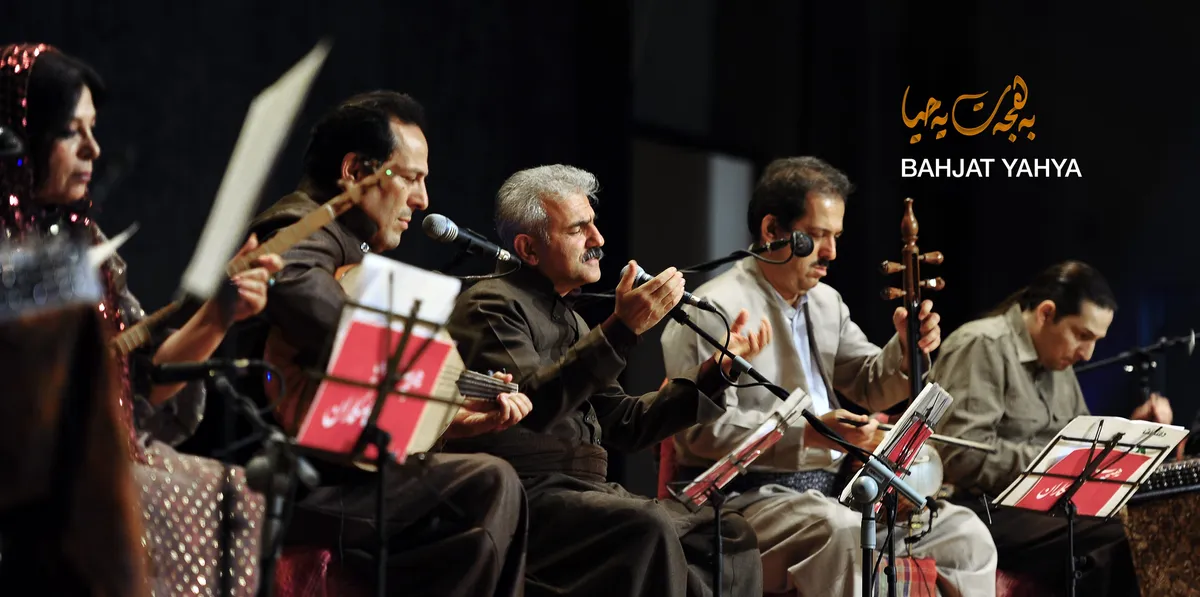
The Kamkars
Quick Facts
- Region: Sanandaj, Kurdistan Province, Iran
- Founded: 1965
- Genre: Traditional Kurdish and Persian
- Known for: Family ensemble of siblings, international concerts, 2003 Nobel Peace Prize ceremony performance
Overview
The Kamkars are a Kurdish musical family ensemble from Sanandaj in Iran’s Kurdistan Province. The group is known for performing traditional Kurdish and Persian music and for maintaining a family-based ensemble that spans multiple generations.
They have performed internationally and are widely recognized as one of the most prominent Kurdish music groups of the modern era.
Formation and Music
The ensemble was established in Sanandaj in 1965 by Hassan Kamkar, a violinist who trained his children in music. Over time, the Kamkars became known for their blend of Kurdish folk traditions with classical Persian musical forms.
Legacy
The Kamkars performed at the 2003 Nobel Peace Prize ceremony honoring Shirin Ebadi, which brought global attention to their music. Their long-running career has made them a cornerstone of Kurdish cultural life and a symbol of Kurdish musical heritage.
Related Figures
- Abdul Rahman Ghassemlou
- Abdulla Goran
- Abdulla Pashew
- Abdullah Ocalan
- Ahmed Arif
- Bachtyar Ali
- Celadet Bedir Khan
- Cigerxwin
- Ehmede Xani (Ahmad-e Khani)
- Feqiyê Teyran
- Haji Qadir Koyi
- Hamdi Ulukaya
- Hassan Zirak
- Hemin Mukriyani
- Ibrahim Ahmed
- Jalal Talabani
- Kamuran Bedir Khan
- Leyla Zana
- Mahmud Bayazidi
- Mahwi
- Maruf Khaznadar
- Masoud Barzani
- Mastura Ardalan
- Mehmed Uzun
- Melayê Cizîrî
- Mohammad Ghazi
- Musa Anter
- Mustafa Barzani
- Nadhmi Auchi
- Nalî (Nali)
- Piramerd
- Qani (Muhammad Kabuli)
- Qazi Muhammad
- Saladin (Salah ad-Din)
- Sharaf Khan Bidlisi
- Sherko Bekas
- Yilmaz Guney